

The question of website design or SEO is one of the most common — and most misunderstood — topics in online marketing. Many businesses feel pressured to choose between the two, assuming one must matter more than the other.
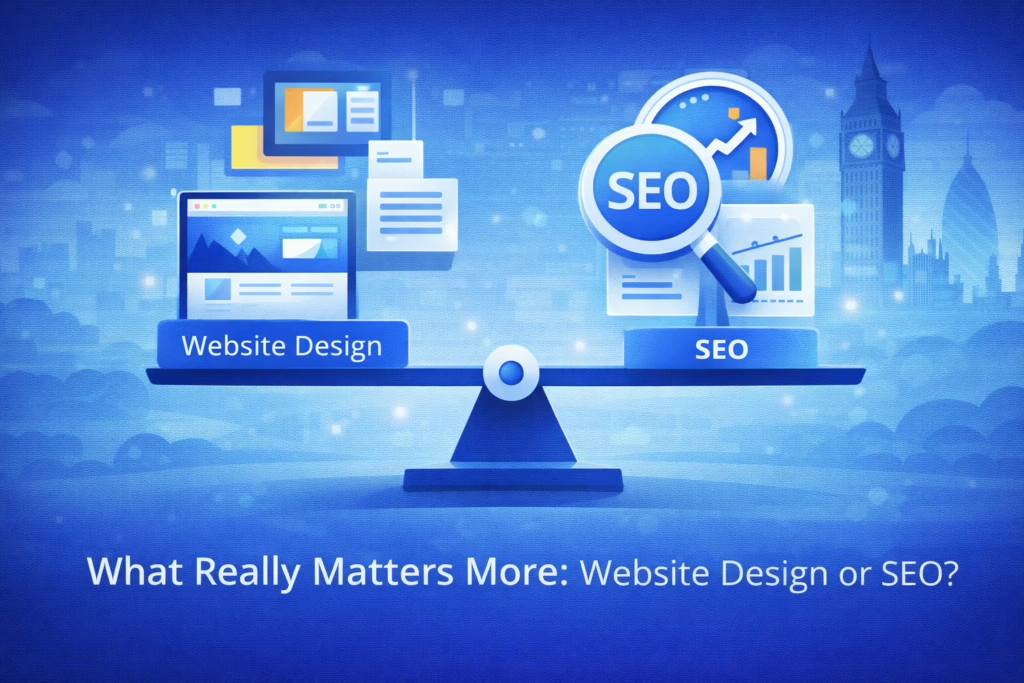
In reality, this question misses the point. Website design and SEO are not competing priorities. They are interdependent, and separating them often leads to disappointing results.
This page explains what each actually does, why neither works well alone, and how they combine to drive enquiries for UK businesses.
What SEO actually does (and what it doesn’t)
SEO exists to make a website discoverable. Its primary role is to help search engines understand:
- What a business offers
- Where it operates
- Which searches it should appear for
When SEO works well, it places a business in front of potential customers at the exact moment they are searching for services.
However, SEO does not:
- Explain services clearly
- Build trust on its own
- Convince visitors to enquire
- Fix poor user experience
This is where many businesses become frustrated. They invest in SEO, see traffic increase, but enquiries remain flat.
What website design actually does
Website design determines what happens after someone arrives. It influences:
- How easily visitors understand the business
- Whether they trust the company
- How confident they feel taking the next step
Good website design is not about visuals alone. It includes:
- Clear structure
- Logical page flow
- Strong calls to action
- Easy navigation
- Professional presentation
A well-designed website supports decision-making. A poorly designed one introduces doubt.
Why SEO without good design rarely converts
One of the clearest answers to the website design or SEO debate is this: SEO can bring visitors, but it cannot convert them.
SEO fails to generate enquiries when:
- The website is confusing
- Key information is hard to find
- The message doesn’t match the search intent
- Trust signals are missing
In these situations, visitors leave — even if SEO is technically strong.
This is why businesses often believe SEO “doesn’t work”, when the real issue is what happens after the click.
Why design without SEO also falls short
On the other side of the website design or SEO discussion, design without visibility is equally limiting.
A beautifully designed website:
- Has no impact if customers never find it
- Cannot generate enquiries without traffic
- Often sits unnoticed without SEO support
Design alone doesn’t attract customers. It only supports them once they arrive.
How search intent connects SEO and design
Search intent is the bridge between website design and SEO. When someone searches, they have a specific goal. SEO helps match the website to that search, but design must fulfil the expectation.
For example:
- SEO attracts the right visitor
- Design confirms relevance
- Messaging builds confidence
- Structure makes enquiry easy
If any of these steps break down, the journey ends.
The role of local SEO in the design vs SEO balance
For small UK businesses, local SEO adds another layer to the website design or SEO conversation. Local visibility relies on:
- Google Search results
- Google Maps listings
- Consistency between listings and website content
A website that contradicts or weakens Google listings reduces trust. Design must reinforce what customers see in search and Maps.
Why user experience affects SEO performance
Website design also indirectly affects SEO. Poor user experience can:
- Increase bounce rates
- Reduce time on site
- Lower engagement signals
While SEO gets users to the site, design influences how search engines interpret user behaviour over time. Websites that satisfy users tend to perform better long-term.
Why the question is framed incorrectly
Asking “website design or SEO?” suggests a choice. The more useful question is:
How well do website design and SEO support each other?
Businesses that stop treating them as separate disciplines see:
- Higher enquiry rates
- Better use of marketing budgets
- More predictable growth
This integrated approach is especially important for service-based and local businesses.
What actually works in practice
For most UK businesses, strong online performance comes from:
- SEO that attracts relevant visitors
- Website design that explains services clearly
- Messaging that builds trust quickly
- Simple, obvious contact paths
- Consistency across search, Maps, and website
This combination outperforms isolated optimisation efforts every time.
How this fits into online visibility strategy
Understanding website design or SEO as a combined system is central to building sustainable online visibility. Neither works in isolation — they reinforce each other.
This is why effective visibility strategies treat:
- SEO as discovery
- Design as conversion
- Clarity as the common thread
Final thoughts
Website design or SEO is not a competition. SEO opens the door; design invites people in.
Businesses that focus on both — and understand how they work together — consistently generate more enquiries and stronger long-term results.